

By Hope Richards, Media Director
One of the biggest strategic mistakes brands still make is treating streaming like one giant interchangeable bucket of inventory.
It’s not.
The streaming landscape has fragmented into distinct ecosystems — each shaping consumer behavior differently and influencing different parts of the decision journey.
That means modern media strategy is no longer just about where audiences are watching. It’s about understanding how different environments drive different types of influence.
Some platforms create cultural relevance.
Some drive intent and action.
Some build loyalty.
Others collapse entertainment, search, creators, and commerce into a single experience.
And the brands gaining an advantage today are the ones aligning platform strengths to business objectives, instead of simply optimizing toward reach alone.
Netflix: The Cultural Conversation Driver
Netflix still owns something incredibly valuable: attention. When audiences open Netflix, they’re typically there intentionally – not casually scrolling. For advertisers, that creates premium association and stronger engagement opportunities tied to major cultural moments and high-attention viewing behavior.
Amazon: The Commerce Machine
Amazon may be the platform that’s changing advertising most aggressively. Why? Because it connects viewing behavior directly to shopping behavior. The conversation is no longer just “Who saw the ad?” – it’s increasingly “Who bought after seeing the ad?” That’s a massive shift in how TV can be measured and valued.
YouTube: The Sleeper Giant of the Living Room
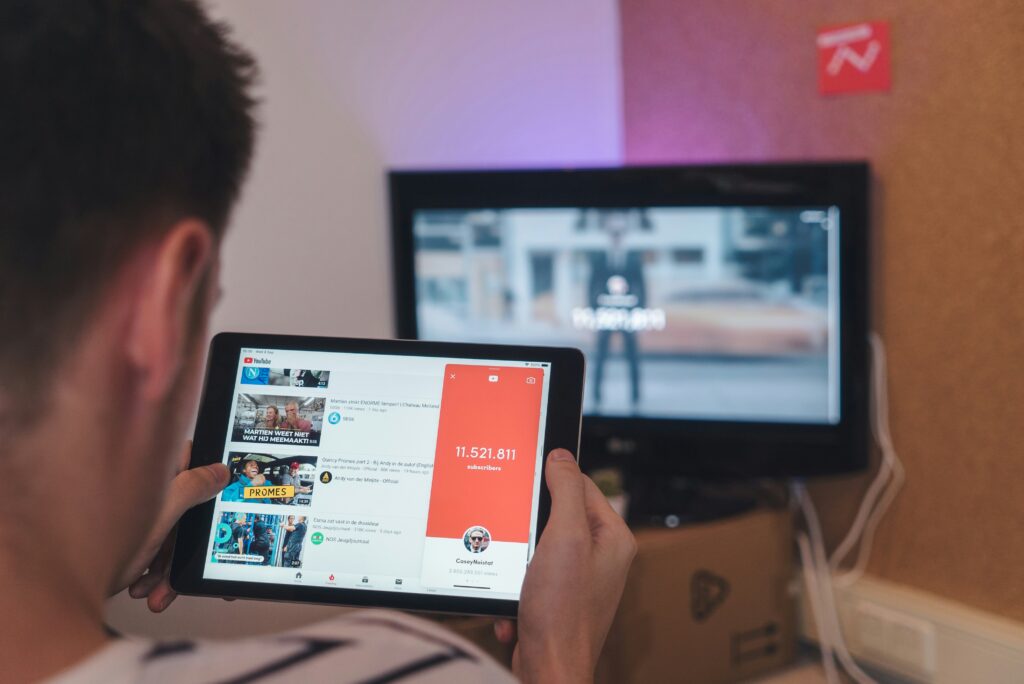
YouTube has quietly become one of the biggest players on the TV screen, especially among younger audiences. What makes it unique is that it blends streaming, creator influence, search behavior, short-form discovery, and long-form viewing into one ecosystem that behaves very differently from traditional television.
It’s entertainment, influence, and intent all happening simultaneously.
Disney/Hulu: Scale + Loyalty
Disney and Hulu continue to dominate when it comes to franchise loyalty, household reach, and live viewing environments – especially with sports continuing to reshape the streaming landscape. For advertisers, that combination still offers something incredibly valuable: scaled audiences gathering around shared cultural moments.
But the bigger takeaway here isn’t which platform is “winning.”
It’s that each platform now serves a different strategic role in the consumer journey — and smarter media strategies are evolving to reflect that.
Today, brands can:
- Deliver cinematic, high-impact storytelling
- Reach more intentional audiences
- Layer in interactive and shoppable experiences
- Sequence messaging fluidly across devices
- Connect exposure to measurable business outcomes
- Optimize campaigns far more dynamically than traditional TV ever allowed
In other words, streaming didn’t just digitize television.
It transformed the living room into a connected, measurable, and increasingly performance-driven media environment.
And for business and media leaders, that changes the conversation entirely.
The future of video strategy isn’t simply about buying reach.
It’s about understanding how different platforms influence behavior — and how those ecosystems work together to create momentum across the modern consumer journey.