

By Hope Richards, Media Director
If the first part of 2026 has reinforced anything, it’s that marketing continues to evolve at an accelerated pace. AI is now embedded across nearly every part of the ecosystem, brand marketing is holding its ground after a long stretch of performance-led decision-making, and social platforms are still navigating questions around trust, transparency, and stability.
At Media+, we’re seeing these shifts play out in real time with our clients. We’re continuing to test new formats, challenge platform defaults, refine measurement approaches, and stay intentional about where automation adds value versus where human strategy still matters most.
As we move through Q2, several themes are defining the landscape and shaping how brands should think about the rest of 2026.
1. Brand Is No Longer a Nice-to-Have in a Performance-Driven Ecosystem
After years of over-indexing on short-term efficiency, many marketers are continuing to rebalance toward brand-building. The reality is clear: lower-funnel tactics can only go so far without the support of strong awareness, familiarity, and emotional connection.
We’re seeing brands lean back into:
- Tentpole TV and live sports, where attention and cultural relevance remain high
- High-impact OOH, including dominations, large-format units, and premium placements
- Experiential activations that create real-world visibility and memorable brand moments
This has been evident in work like AAA’s renewed investment in brand media across Seattle and Spokane, aligning with high-passion moments and high-visibility placements such as in-game TV sponsorships, station dominations, bus billboards, and large-format OOH. The result is broader reach, stronger familiarity, and more meaningful down-funnel impact. We’re seeing a similar pattern with Ben Bridge, who continues to invest in visually bold, high-impact placements to showcase jewelry and timepieces – from premium mall takeovers and large-format bulletins to a standout 3D billboard on the Las Vegas Strip during F1. Paired with community-based activations like Zoo Lights, these efforts reinforce the brand in both marquee and local environments.
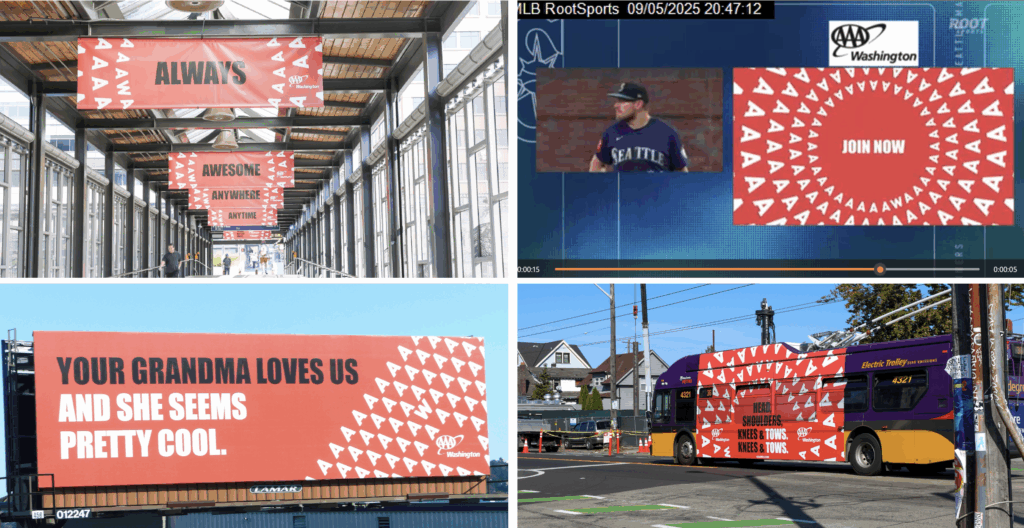
Recently, AAA leaned back into brand media across Seattle and Spokane—aligning with high-passion moments and high-visibility placements like In-game TV sponsorships and station dominations around the Mariners’ playoff run, bus billboards and large-format OOH. Together, these efforts strengthened broad reach, renewed brand familiarity, and helped drive meaningful down-funnel lift.
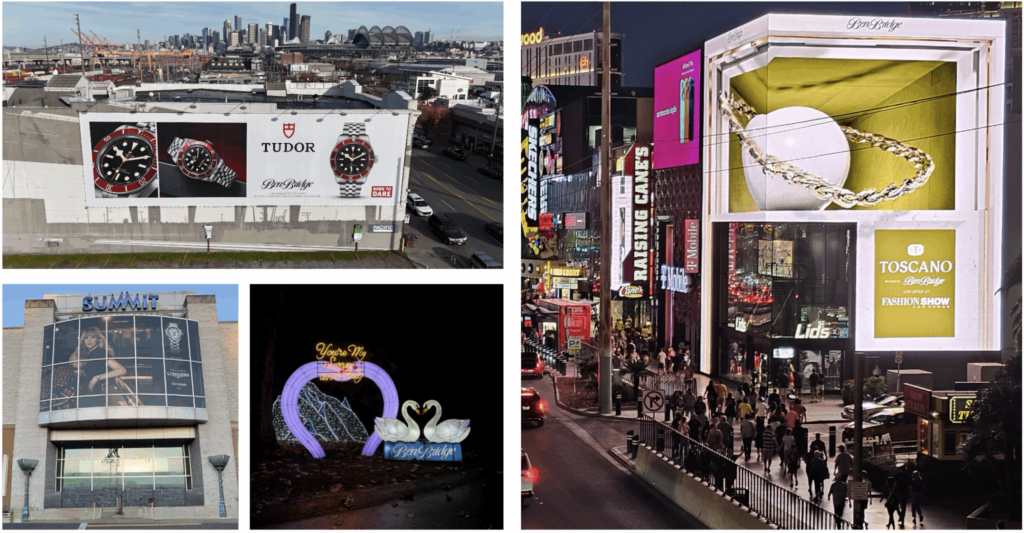
Ben Bridge continued to lean into high-impact, visually bold placements to showcase its jewelry and timepieces – from large-format bulletins and premium mall takeovers to a standout 3D billboard on the Las Vegas Strip during F1, reaching affluent audiences at peak moments. These formats, paired with community-focused activations like Zoo Lights, helped reinforce the brand across both marquee and local environments.
2. Trust on Social Still Matters – and AI Is Raising the Stakes
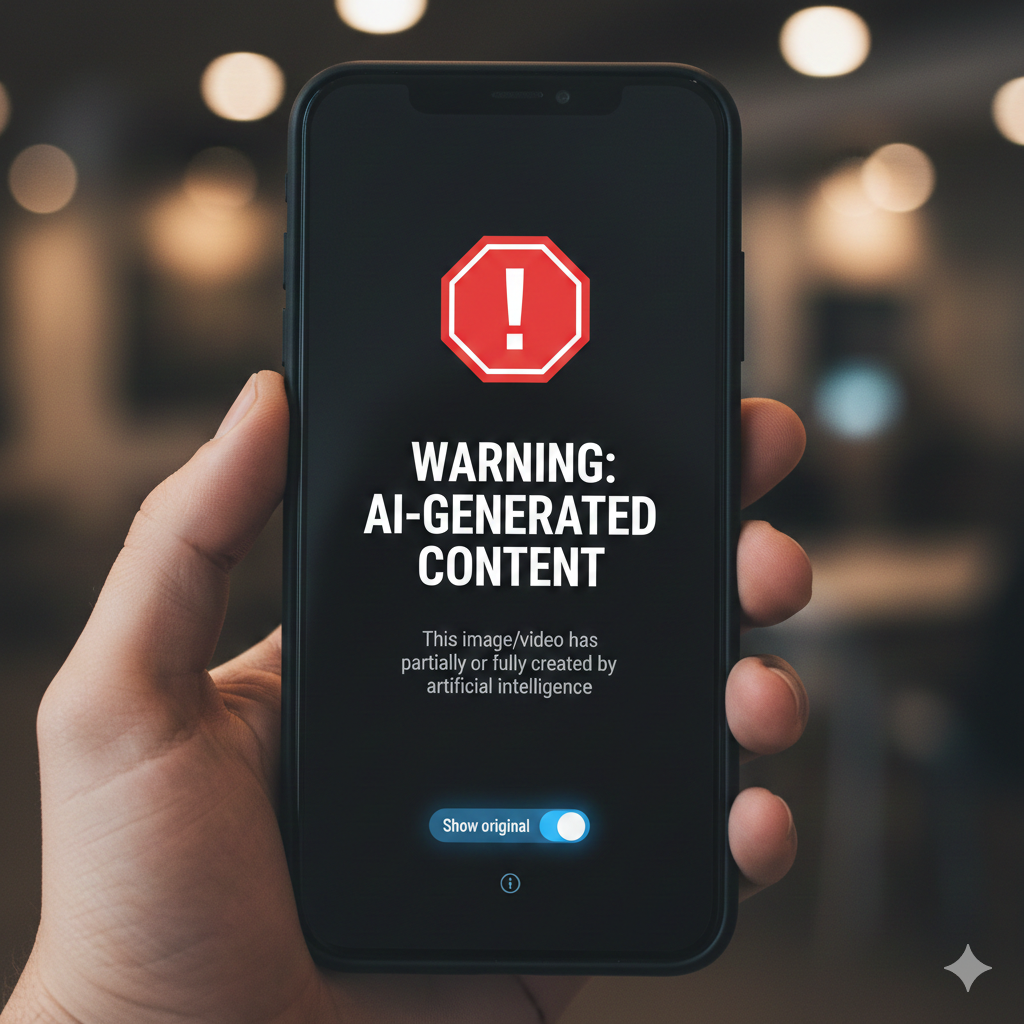
Audiences have become more discerning. As AI-generated and synthetic content becomes more common, users are placing greater value on content that feels credible, human, and grounded in real perspective.
For brands, that has made execution more nuanced. AI can absolutely support speed, scale, and iteration – but when content feels overly polished, generic, or disconnected from the brand, audiences notice. The challenge is no longer whether AI should be used. It’s how transparently and thoughtfully it’s applied.
We’re continuing to see platforms reinforce this direction through:
- AI-labeling tools
- Authenticity signals
- Stricter verification and disclosure expectations
The takeaway is not to avoid AI. It’s to use it in a way that supports, rather than replaces, human insight and authentic creative.
3. Purpose-Driven Marketing Has Become More Grounded
Purpose still matters, but audiences are increasingly expecting proof over positioning. Broad statements and brand-led declarations carry less weight than tangible, visible action.
That’s pushing more brands toward work that feels local, participatory, and demonstrable – whether through community partnerships, employee-led efforts, or initiatives with clear real-world impact.
Influencer strategy reflects the same shift. Brands are placing more value on creators who are natural extensions of the brand rather than paid spokespeople reading a script. When the alignment is real, credibility and engagement tend to follow. A strong example is Papa Murphy’s partnership with Mary’s Place for the Boo & Bundle donation drive, which focused on collecting Halloween costumes and winter gear for families experiencing homelessness. Rather than relying on abstract values messaging, the brand showed up in a way audiences could see and participate in – making the effort feel more authentic and more meaningful.
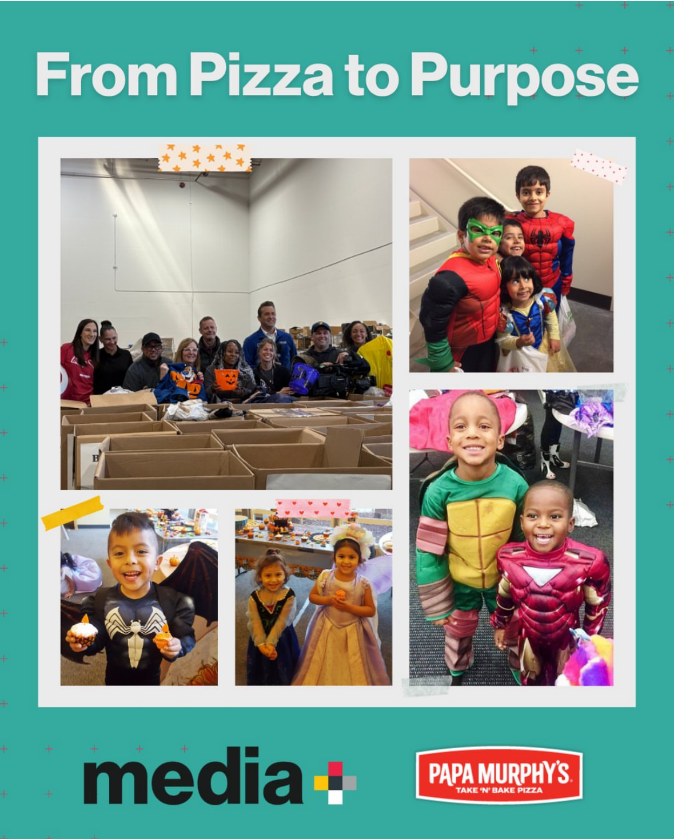
Media+ helped Papa Murphy’s activate purpose in a tangible, community-centered way by partnering with Mary’s Place for the Boo & Bundle donation drive — collecting Halloween costumes and warm winter gear for families experiencing homelessness. Rather than leaning on broad values messaging, the brand focused on real, local impact that audiences could see and participate in, reinforcing authenticity and strengthening community connection.
4. Short-Form Video Remains Essential (Even if Platform Certainty Does Not)
Uncertainty around TikTok may have ebbed and flowed, but the broader impact remains: brands are more conscious about diversification and less willing to over-rely on a single platform.
What continues to hold true is that short-form video remains a critical format for discovery, storytelling, and cultural relevance. At the same time, brands are recognizing that TikTok, Instagram Reels, and YouTube Shorts are not interchangeable. Each demands its own creative approach, audience understanding, and platform fluency.
What we’re continuing to see:
- Short-form is strong for discovery and storytelling, though not always a direct-response driver
- Native creative continues to outperform more traditional adaptations
- Platform-specific execution matters; one-size-fits-all short-form rarely works
- Upper-funnel social exposure often contributes to downstream traffic and conversion lift through other channels
The implication for brands is clear: short-form video remains important, but success comes from tailoring creative to the platform rather than simply repurposing assets across environments.
5. Personalization Is Getting Smarter – and More Selective
Rather than chasing fragmented fringe platforms, many marketers are finding more value in identifying niche communities and moments within the major ecosystems they already use – Meta, TikTok, and programmatic display/video.
That means deeper emphasis on:
- Interest- and behavior-based targeting
- Contextual alignment and high-intent environments
- Micro-segmentation within larger platforms
- Personalized creative based on geography, life stage, need state, or intent
- AI-assisted creative versioning that helps scale message variation efficiently
At the same time, more automation has not always meant better control. Tools from platforms like Meta can improve efficiency in some cases, especially for broad direct response campaigns, but they can also create risk for brands that need tighter safeguards, regulated language, or higher creative precision.
Tools like Resonate continue to help sharpen persona development and motivator-based messaging, while platform automation is best used selectively and with clear guardrails.Ben Bridge is one example of this trend in action, leaning into authentic creators who were genuinely ring shopping and documenting their engagement journeys. By pairing creator content with TikTok and Meta interest/behavior signals, the brand was able to place highly relevant messaging in front of audiences already engaging with proposal planning and ring-related content.
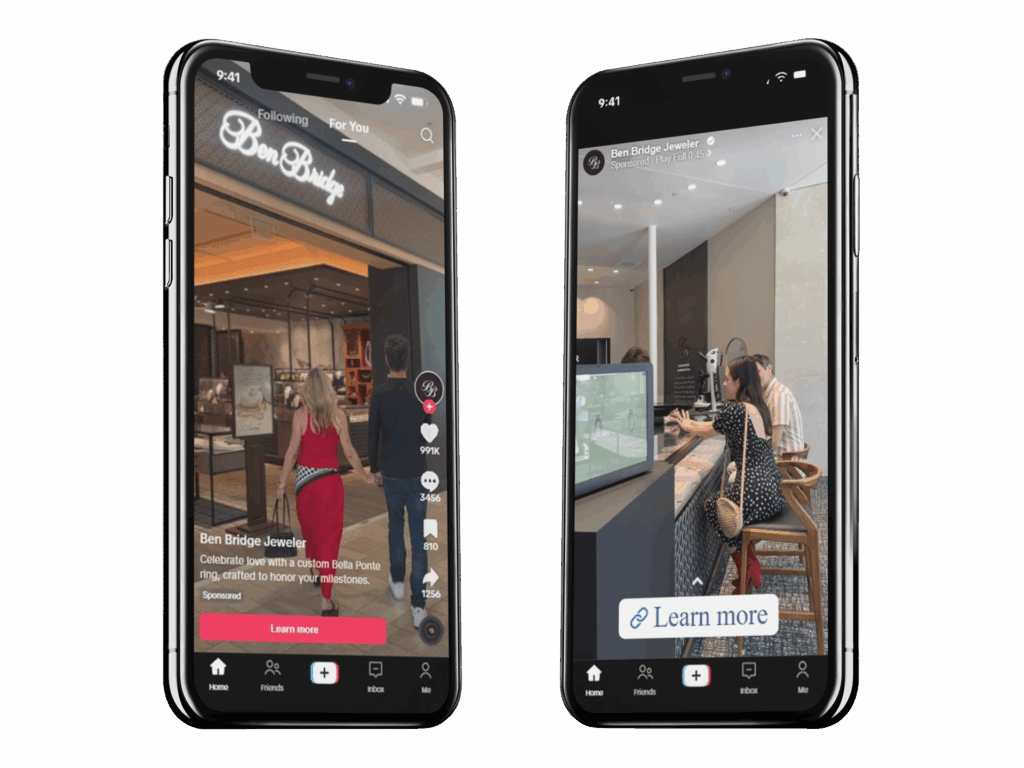
Ben Bridge leaned into niche targeting by partnering with authentic creators who were genuinely ring shopping and sharing their engagement journeys. Using TikTok and Meta interest and behavior signals, the brand delivered this content directly to audiences already engaging with proposal planning and ring-related content — creating highly relevant, personalized touch-points within platforms they already use.
What Brands Should Pay Attention to Now
2025 reminded us that marketing is strongest when innovation and humanity work together. As we move through the rest of 2026, a few priorities are becoming increasingly important:
- Stronger full-funnel measurement that better captures brand impact
- More thoughtful personalization that feels relevant without crossing into overreach
- Clearer transparency around AI and how it is used in content
- Bigger brand moments supported by disciplined performance strategy
- Creators, customers, and real people continuing to anchor storytelling
If there’s one thing this moment makes clear, it’s that the brands best positioned for the rest of 2026 will be the ones that embrace innovation without losing the human element.
Next Steps
Ready to future-proof your media approach? We’re standing by to help. Talk to Media+